Padel ROI & Revenue Guide
What could a padel facility really earn?
Understand the numbers behind padel revenue — from court pricing and utilisation to peak demand, operating costs and the factors that determine whether a project is commercially viable.
A practical UK guide for investors, landowners, hotels, leisure operators and sports clubs considering padel.
At a glance
Six variables decide what a padel venue earns
Padel can generate attractive court revenue, but the headline court price is only the beginning. Real viability depends on utilisation, pricing, court count, operating hours, seasonality, venue type, location, capital cost and the wider operating model.
Court count
More courts increase revenue capacity, but also increase capital and operating costs.
Utilisation
The percentage of available court time actually sold is one of the biggest drivers of revenue.
Average achieved price
Headline peak pricing is not the same as the average price achieved across all booked hours.
Opening hours
Longer operating hours increase theoretical capacity but may not increase profitable demand.
Location
Demand, competition, catchment, demographics and accessibility materially affect utilisation.
Operating model
A standalone club, hotel, tennis club and leisure facility can have very different economics.
Revenue is not profit. Court income sits above staffing, rent or land cost, business rates, energy, maintenance, software, marketing and financing.
Court revenue is not total club revenue. Membership, coaching, leagues and food and beverage may add income — but not every venue can support every stream.
The maths
The basic padel revenue equation
Everything else in this guide is a way of pressure-testing the four numbers in this line.
Court revenue = number of courts × available hours × utilisation × average achieved court price
An illustration
Imagine a facility with 4 courts, open 12 hours per day, with an average achieved court price of £30 and 50% utilisation.
- 4 courts
- × 12 hours per day
- × 365 days
- × 50% utilisation
- × £30 average achieved price
≈ £262,800 theoretical annual court revenue
Illustration only. Actual revenue will depend on local pricing, demand, operating hours, seasonality, competition, court availability and the commercial model of the facility. These figures are illustrative assumptions, not industry averages.
Interactive
Padel revenue calculator
Change the assumptions to see how revenue capacity and forecast court revenue move. Revenue capacity is what the courts could theoretically sell; forecast revenue is what you believe they will actually sell.
Your assumptions
Revenue capacity
- Daily court capacity
- 48 court hours
- Annual court hours available
- 17,520
Illustrative forecast revenue
£262,800
estimated annual court revenue
- Monthly average
- £21,900
- Court hours sold
- 8,760
- Average achieved price
- £30/hr
- Effective utilisation
- 50%
This is court revenue, not profit, and not total club revenue. Operating costs, staffing, rent, rates, energy, maintenance and financing all sit outside this figure.
Chart — utilisation vs annual court revenue
Everything held constant at your assumptions (£30 average achieved price, 4 courts, 12 hours/day, 365 days). Illustrative only.
- 30%£157,680
- 40%£210,240
- 50%£262,800
- 60%£315,360
- 70%£367,920
This calculator is an early-stage commercial illustration, not a business plan or investment appraisal.
The big number
Utilisation matters more than the headline court price
A court advertised at £35 per hour does not necessarily generate £35 for every available hour. The real question is what average achieved price the facility can sustain across the hours it can realistically sell.
Utilisation is the share of available court hours you actually sell. Because it multiplies straight through the revenue equation, a ten-point change moves the result far more than a pound or two on the price list. Move the utilisation slider in the calculator above to see the sensitivity on your own assumptions.
Demand is rarely spread evenly. Understanding where your hours will actually sell is the difference between a model and a guess.
- Peak periods
- Weekday daytime
- Weekday evenings
- Weekends
- School holidays
- Winter
- Summer
- Weather
- Local competition
- Membership behaviour
- Booking patterns
The utilisation chart in the calculator holds every other assumption constant. All values shown are illustrative.
Pricing
Don't build the model around peak pricing
Advertised peak price and average achieved price are two different numbers. Multiplying the peak rate by every available hour is the single most common way a padel model overstates revenue.
| Hour band | Typical demand | Pricing behaviour |
|---|---|---|
| Weekday daytime | Lowest | Lower rates, blocks, coaching, seniors and juniors |
| Weekday evening | Highest | Peak rates, heaviest member competition for slots |
| Weekend daytime | High | Peak or near-peak, strong social and league demand |
| Weekend evening | Variable | Often softer than weekday evenings |
| Seasonal variation | Winter dip outdoors | Discounting risk without cover or lighting |
A credible revenue model uses a blended achieved price across all booked hours — never the peak advertised rate applied to the whole week.
Scale
How many courts does a viable padel venue need?
There is no universal answer, and no court count is automatically viable. What changes with scale is the type of business you are running.
1–2 courts
Potentially suitable for hotels, existing clubs, leisure facilities and smaller venues where overheads are already carried by the wider site — but limited revenue capacity on their own.
- Amenity value
- Lower capital
- Existing overheads
- Capped revenue
3–4 courts
Potentially creates a stronger operating base for a dedicated venue, with enough capacity to build a player network rather than a waiting list.
- Better player network
- Simultaneous bookings
- Leagues and coaching
- More resilient utilisation
5–8+ courts
Potentially supports a larger commercial club model, with the staffing, capital and operational responsibility that comes with it.
- Reception and clubhouse
- Social space and F&B
- Events and competitions
- Larger staffing and capital
Revenue mix
Court bookings may only be one part of the model
Ancillary income can transform a venue's economics — or never materialise at all. Model it separately, and only where the site, staffing and member base genuinely support it.
- Membership
- Coaching
- Junior programmes
- Leagues
- Tournaments
- Corporate events
- Social events
- Food and beverage
- Equipment sales
- Racket hire
- Ball sales
- Sponsorship
- Advertising
- Partnerships
Not every venue needs or can support all of these revenue streams. A hotel, a tennis club and a standalone commercial padel club may have completely different revenue models.
The other half
Revenue is only half the equation
Most optimistic padel models fail on the cost side rather than the revenue side. As builders, this is the part we see underestimated most often — particularly groundworks, drainage and enabling works.
Capital costs
- Land acquisition or lease
- Groundworks
- Drainage
- Concrete bases
- Courts
- Lighting
- Covered structure
- Indoor building
- Electrical infrastructure
- Access
- Parking
- Landscaping
- Reception / clubhouse
- Toilets and changing facilities
- Planning
- Professional fees and surveys
- Contingency
Operating costs
- Rent / lease
- Business rates
- Electricity
- Heating
- Lighting
- Insurance
- Staffing
- Cleaning
- Maintenance
- Court replacement
- Booking software
- Marketing
- Repairs
- Security
- Waste
- Professional fees
Financing
- Debt
- Interest
- Investor capital
- Lease costs
- Capital repayment
Build & Padel is a construction business. Nothing in this guide is investment, tax or financial advice.
UK padel court construction costs →Facility type
The revenue model changes with the facility
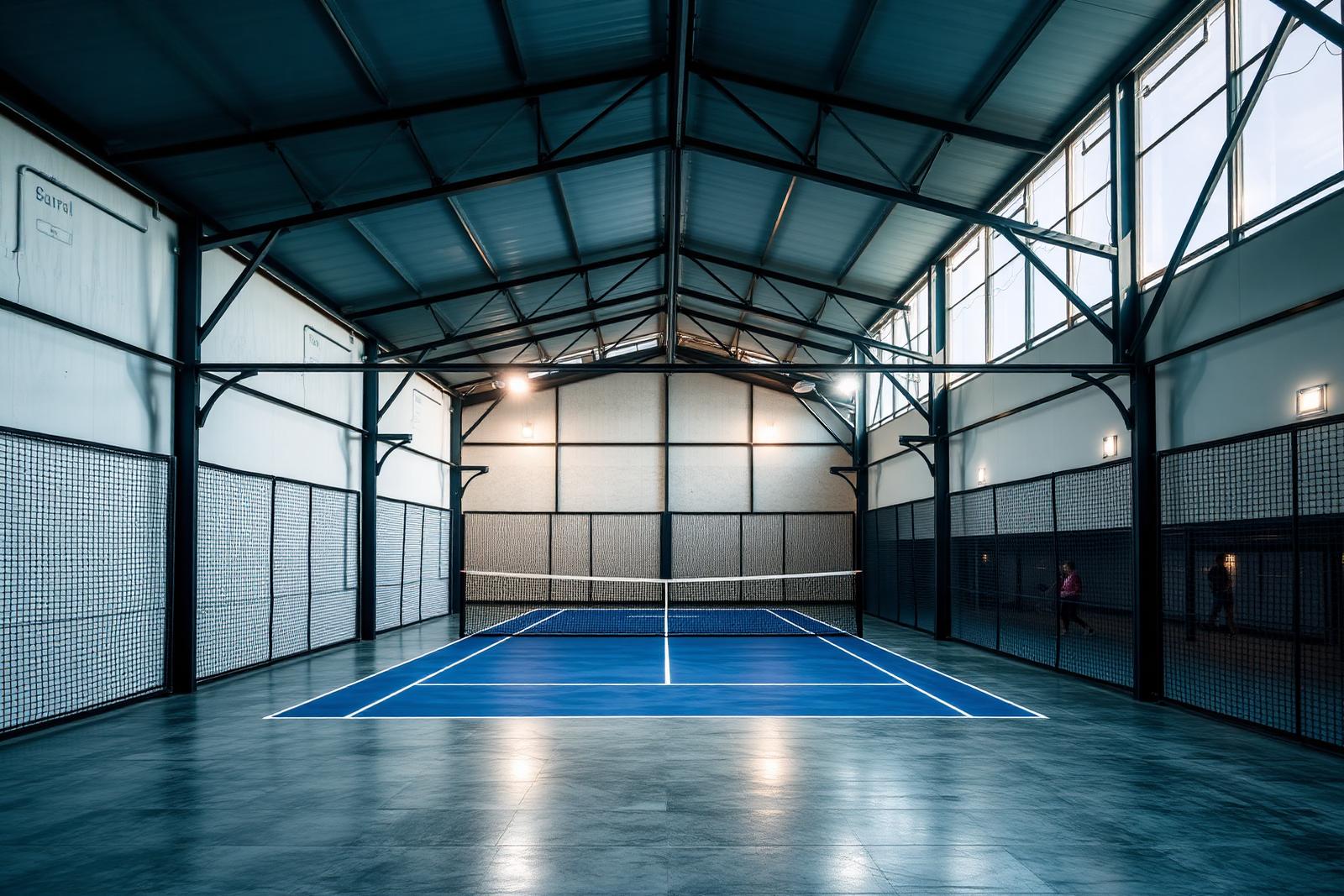
Outdoor, covered and indoor courts are not the same business. Each shifts capital cost, utilisation and operating cost in a different direction.
| Outdoor | Covered | Indoor | |
|---|---|---|---|
| Weather exposure | High | Reduced | None |
| Seasonality | Pronounced | Moderate | Limited |
| Opening hours | Daylight and floodlight dependent | Extended | Full, consistent |
| Capital cost | Lowest | Middle | Highest |
| Planning complexity | Lower | Higher | Highest |
| Maintenance | Weather and debris driven | Court plus structure | Court plus building |
| Potential utilisation | Most variable | More stable | Most stable |
| User experience | Weather dependent | Sheltered play | Year-round consistency |
| Revenue resilience | Lowest | Improved | Strongest, at highest cost |
| Energy cost | Lighting only | Lighting, some services | Lighting, heating, ventilation |
Directional comparison based on our construction experience — not a cost schedule.
Sensitivity
Model a downside, a base and an upside
A model that only works in the upside case is not a model. Test the downside first — it is the case that decides whether the project survives a slow first two years.
Downside case
Lower utilisation, softer achieved pricing, slower ramp-up, limited ancillary income and full operating costs. This is the case that should drive the funding conversation.
Base case
Realistic utilisation for the catchment, blended pricing across hour bands, and only the ancillary income the venue can genuinely staff and support.
Upside case
Strong utilisation, strong pricing and additional revenue streams performing. Useful for understanding potential — never the expected outcome.
Next level of detail
From revenue estimate to business plan
This guide is an early-stage framework. A full padel business plan and financial model should go considerably further.
- Local market demand
- Competitor analysis
- Site suitability
- Court layout
- Planning
- Capital expenditure
- Operating expenditure
- Pricing strategy
- Utilisation assumptions
- Staffing
- Marketing
- Membership
- Ancillary revenue
- Financing
- Cash flow
- Sensitivity analysis
- Payback / return metrics where appropriate
The numbers become meaningful when they are tied to a real site, a real catchment and a realistic development cost.
Due diligence
Warning signs in a padel financial model
If you are reviewing a model — your own or someone else's — these are the assumptions worth challenging first.
- Assuming 100% utilisation
- Using peak price for every booking
- Ignoring seasonality
- Ignoring weather
- Ignoring downtime
- Ignoring maintenance
- Ignoring staffing
- Ignoring planning costs
- Ignoring groundworks
- Ignoring drainage
- Ignoring access and parking
- Assuming all ancillary revenue will materialise
- Ignoring rent
- Ignoring financing
- Using competitor pricing without checking local demand
- Treating revenue as profit
- Assuming an indoor building is justified without testing utilisation
Venue types
The same courts, five different businesses
Where the courts sit changes what they are worth. Model padel as part of the venue it belongs to, not as a standalone spreadsheet.
Hotel
Potential value may include guest amenity, external memberships, corporate use, events, additional food and beverage spend and longer dwell time. Utilisation patterns may differ significantly from a standalone club.
Tennis club
Existing members, existing land, an existing clubhouse and an existing coaching structure lower both capital and operating burden, with scope to cross-sell between tennis and padel.
Golf club
An existing member base and existing facilities support leisure diversification and can improve off-peak utilisation of the wider site.
Leisure operator
An existing customer base, multiple revenue streams, central booking infrastructure and cross-selling can support court demand from day one.
Standalone investor-owned club
A dedicated commercial model with membership, events, coaching and food and beverage gives greater control — alongside greater capital exposure, more operational responsibility and greater dependence on local demand.
Worked example
Illustrative 4-court example
A hypothetical venue, not a Build & Padel customer. The purpose is to show how the model should be constructed — not to publish an ROI figure.
Assumptions
- 4 outdoor floodlit courts
- Open 12 hours per day, 360 days per year
- Average achieved price £30 per court hour
- Overall utilisation 50% at maturity
- Ramp-up over the first 18 months
Illustrative annual court revenue ≈ £259,200
Categories to add
Ancillary revenue — model each separately
- Membership
- Coaching and junior programmes
- Leagues and tournaments
- Food and beverage
- Hire, retail and events
Operating cost categories
- Staffing and management
- Rent, rates and insurance
- Energy and maintenance
- Software, marketing and professional fees
Capital cost categories
- Site preparation and groundworks
- Drainage and concrete bases
- Courts, glass and turf
- Floodlighting and electrical supply
- Access, parking and landscaping
- Facilities, planning, fees and contingency
A project-specific appraisal requires actual site, market, construction and operating assumptions.
Illustration only. These figures are hypothetical assumptions chosen to demonstrate the method. We have deliberately not published an ROI percentage, because a credible one cannot be produced without a real site and a real development cost.
Free Desktop Site Assessment
Wondering whether your site could support a viable padel project?
Start with the site, not the spreadsheet. Send us the location and a little information about the land or venue and we'll give you an initial view of its padel potential.
We'll look at the opportunity at an early stage and help you understand what needs investigating next. It is an initial view — not a feasibility study, planning advice, an ROI figure or a financial model.
Next
Before you build the numbers, understand the build cost
Revenue is only half the equation. Our Padel Development Cost Guide explains the major cost components behind a UK padel development, including courts, groundworks, drainage, structures and enabling works.
Why Build & Padel
We're builders first. That changes the entire project.
Construction-led
Build & Padel comes from a construction and groundworks background.
Manufacturer-agnostic
The business is not tied to a single court manufacturer.
UK-based
UK delivery and construction experience, with an in-house team.
End-to-end
Feasibility, planning, groundworks, court installation and aftercare under one contract.
Practical advice
If a site isn't suitable, we say so.
Built to last
We know what cuts corners cost two years later — and we price for the court, not the sale.
FAQs
Padel profitability, revenue and business plan questions
Is padel profitable in the UK?
It can be, but profitability is site-specific rather than sport-specific. A padel venue makes money when it sells enough court hours at a sustainable average price to cover staffing, rent or land cost, business rates, energy, maintenance, software, marketing and financing — and then repays the capital spent on groundworks, courts, lighting and any structure. Two venues with identical courts can produce very different results because of catchment, competition, access, pricing and the operating model.
How much revenue can a padel court generate?
Court revenue is available hours × utilisation × average achieved price. As an illustration only: one court open 12 hours a day, 365 days a year, at 50% utilisation and a £30 average achieved price generates in the region of £65,000 of annual court revenue. Change utilisation to 35% or the achieved price to £22 and the figure falls sharply. Treat any single number you see quoted as an assumption to test, not a benchmark.
How much does a padel court make per year?
There is no reliable universal figure, and anyone quoting one without stating their utilisation and achieved price assumptions is guessing. Use the calculator on this page with your own hours, pricing and a deliberately cautious utilisation, then subtract operating costs to see what is actually left.
How much does it cost to run a padel court?
Recurring costs typically include rent or lease, business rates, electricity for floodlighting and any heating, insurance, staffing or management time, cleaning, brushing and turf maintenance, netting and glass repairs, booking software, marketing, waste, security and professional fees. Indoor venues carry materially higher energy and building maintenance costs than outdoor courts. A sinking fund for turf and glass replacement should also be modelled.
How many padel courts do you need for a profitable club?
There is no universal answer. One or two courts often work as an amenity at a hotel, tennis club or existing leisure venue where overheads are already covered. A dedicated venue usually needs enough courts to support a player network, leagues, coaching and simultaneous bookings — commonly three or four as a base, with five or more supporting a fuller club model with reception, social space and food and beverage. More courts increase revenue capacity and capital and operating cost at the same time.
What utilisation rate do padel courts need?
Rather than aiming at a headline percentage, model the hours you can realistically sell. Weekday evenings and weekend mornings tend to be the strongest periods; weekday daytime is usually the hardest to fill. A credible model tests the downside — what happens at 30–35% overall utilisation — before it considers a stronger case.
How much should I charge for a padel court?
Pricing should reflect local demand, local alternatives, your cost base and the mix of hours you need to sell. Most venues use peak and off-peak rates, member and non-member rates, and blocks or memberships to secure repeat off-peak play. What matters commercially is the average achieved price across all booked hours, not the highest rate on the price list.
How do you calculate padel court revenue?
Court revenue = number of courts × available hours × utilisation × average achieved court price. Then model ancillary revenue — membership, coaching, leagues, events, food and beverage, hire and retail — separately, and only where the venue can genuinely support it.
What is a realistic padel court occupancy rate?
It depends on catchment population, competition, court type, opening hours and how established the local player base is. New venues typically ramp up over months rather than opening at maturity, and outdoor courts lose hours to weather and winter daylight. Model a ramp-up period rather than assuming day-one maturity.
Is an indoor padel club more profitable than an outdoor one?
Indoor courts protect utilisation from weather and season, which supports higher and more consistent achieved revenue. They also carry much higher capital cost, more complex planning, and significantly higher energy and building maintenance costs. Indoor only makes commercial sense where the extra utilisation and pricing genuinely repay that additional capital and cost.
Is padel a good investment?
We build courts, we do not give investment advice. What we can say is that the projects that hold up under scrutiny are the ones where the site works physically, the development cost is understood, and the revenue model survives cautious utilisation and pricing assumptions. If a model only works at peak pricing and near-full occupancy, it is not a model — it is a hope.
How do I create a padel business plan?
Start with the site and the catchment, then a court layout and a realistic development cost. Build a bottom-up revenue model by hour band, add ancillary income only where justified, list operating costs in full, then run downside, base and upside cases with a sensitivity analysis on utilisation and achieved price. Finish with cash flow, financing and a ramp-up assumption.
What should be included in a padel financial model?
Capital expenditure including groundworks, drainage, courts, lighting, any structure, access, parking and professional fees plus contingency; operating expenditure in full; revenue split by hour band; ancillary revenue; staffing; marketing; financing costs; replacement cycles for turf and glass; and a sensitivity analysis showing what happens when utilisation or achieved price falls.
How much does it cost to build a padel club?
Court cost is only part of it. Groundworks, drainage, concrete bases, electrical infrastructure, floodlighting, fencing, access, parking, landscaping, reception and changing facilities, planning and professional fees all add up, and site conditions drive a lot of the variance. Our Padel Development Cost Guide walks through the major components; a site visit is what turns those ranges into a number.
Can a hotel make money from padel courts?
Often the value is broader than court income alone — guest amenity, longer dwell time, additional food and beverage spend, corporate and event use, and external memberships in off-peak hours. Utilisation patterns usually differ from a standalone club, so model the courts as part of the wider hotel offer rather than as a separate business.
Can a tennis club make money from adding padel?
Many clubs are well placed because the land, clubhouse, coaching structure and member base already exist, which lowers both capital and operating burden. The main considerations are whether the site can physically take courts with correct run-off and lighting, what planning requires, and how padel and tennis pricing and court allocation interact.